Mango Wood Furniture The Story Behind Our Sustainable Timber


Shopping for furniture online often makes you focus purely on the price. You might also look at the final dimensions or how a piece fits your living room wall. However, the most compelling furniture pieces carry a deep history. They truly anchor a space because they offer much more than a generic factory assembly line.
Ultimately, true luxury avoids mass production. It centers instead on material honesty, long-term durability, and choosing pieces that bring natural warmth into your home.
Crucially, our solid wood collections do not start their journey in a commercial timber yard. Our timber serves an entirely different purpose long before it becomes a minimalist sideboard or a contemporary slatted coffee table. Therefore, we want to share the story of that journey. It is a narrative of conscious design, raw craftsmanship, and the resurrection of a remarkable sustainable hardwood.
The First Life The Tropical Orchard
The story begins in lush tropical groves. In these areas, mango trees grow rapidly. They reach full maturity much faster than traditional European hardwoods like oak or walnut. For decades, farmers nurture these trees by hand for a single purpose—their fruit.
Consequently, generation after generation of farmers tend to these orchards. Over twenty to thirty years, the trees grow massive and dense. They become structurally resilient because they absorb rich nutrients from the tropical soil. Eventually, however, nature takes its course. The trees reach the end of their fruit-bearing lifecycle and their yield drops. As a result, farmers must clear the ground to make way for new saplings.
In contrast to our practices, mass-market industries often treat older trees as agricultural waste. Workers routinely cut them down, leave them to rot, or burn them. This burning releases carbon back into the atmosphere. Fortunately, our workshop steps in here. We actively shift the narrative from waste to conscious luxury. By reclaiming this timber, we give a beautiful, high-performing hardwood a second life. This process keeps the carbon locked safely within the wood.
Sourced and Handcrafted at the Root
To practice sustainable design, you must look at where a material naturally thrives. Specifically, mango trees are native to India, meaning the entire natural resource grows in abundance there within its ideal climate.
Instead of shipping raw logs across the world to a western factory, we build our furniture directly at the source in India. Global shipping adds massive transit footprints and drives up costs unnecessarily. Therefore, local manufacturing makes immense practical sense. It is significantly more cost-effective to produce our furniture in India. Consequently, we pass those direct savings on to you. This choice allows us to offer solid timber pieces without bloated high-street price tags.
Moreover, this setup gives us direct access to generations of local artisan skill. The craftsmen in our workshop understand the distinct nature of this wood intimately. As a result, they shape the raw timber right next to the groves where it grew.
The Rebirth Embracing Material Honesty
Once our craftsmen prepare the seasoned timber, the true character of the wood reveals itself. Raw mango wood refuses to conform. In fact, it differs wildly from uniform, mass-manufactured materials or particleboard covered in plastic veneers. Instead, it proudly displays the genuine history of its decades in the orchard.
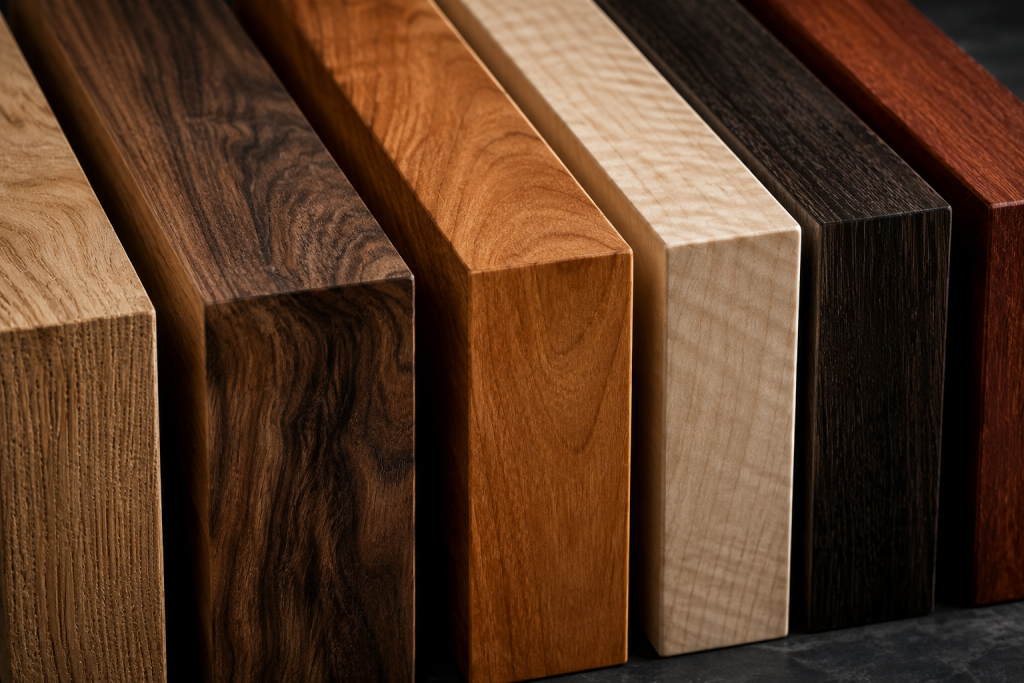
Because of this unique growth pattern, solid mango wood showcases a spectacular, natural spectrum of colours. Within a single cut of timber, you will discover warm golden ambers and deep rich browns. You will also notice subtle streaks of charcoal grey or soft pink. Furthermore, the grain pattern is highly expressive. It is filled with shifting swirls, natural knots, and unique structural variations.
Typically, mass-market brands cut away these variations. Alternatively, they hide them under thick, synthetic stains to create an artificial, uniform look. However, we take the exact opposite approach. We celebrate these details as a hallmark of material authenticity. Ultimately, these natural variations ensure that the piece arriving at your door is entirely bespoke. No one else in the world will own a duplicate.
The Final Form Built for Modern Living
While the sustainability story is compelling, high-end furniture must also withstand the realities of daily life. Beneath its striking visual character, mango wood is a true, dense hardwood. It possesses an immense structural strength that easily handles the demands of a busy modern home, making it a brilliant investment for dining tables, media units, and heavy-use storage. If you are debating how this timber compares to other premium materials, you can read our breakdown on Oak vs Walnut vs Chestnut.
Our master craftsmen work with these natural properties rather than fighting against them. They transform this rugged timber into clean, minimalist architectural silhouettes. Whether it is the fluid, rounded frames of our vertical slatted coffee tables or the substantial weight of our dining tables, the finished pieces bridge the gap between raw organic texture and refined luxury design. To ensure these textures stay pristine, see our practical advice on How to Care for Solid Wood Furniture.
Furthermore, solid timber effortlessly handles the shifting ambient humidity and temperature changes typical of British homes. It expands and contracts naturally without compromising its joints, ensuring your investment will not warp, split, or degrade across changing seasons like cheap alternatives do.
A Conscious Investment
Choosing mango wood means investing in a piece of furniture that tells a deeper story. It is a choice that values slow design, material authenticity, and genuine craftsmanship over disposable, flat-pack furniture.
Instead of losing value the moment it leaves a showroom, a solid wood piece develops a rich, beautiful patina over time. It gains unique character as it ages, transforming from a functional item into a genuine heirloom. To understand more about the long-term benefits of opting for natural craftsmanship over mass production, take a look at Why Solid Wood Furniture is a Lifetime Investment.
Bring the Story Home
If you appreciate spaces that feel grounded, intentional, and entirely authentic, our mango wood pieces are built for your home. You can look through our current arrivals to find a piece that brings that exact sense of natural warmth and raw, architectural texture into your living room.
Mango Wood Furniture FAQs
Is mango wood a real solid wood?
Yes. Mango wood is a true, dense tropical hardwood. In fact, it belongs to the same hardness category as traditional woods like oak and walnut. Therefore, it is structurally resilient. It works perfectly for heavy-use furniture like dining tables and sideboards.
Why does my mango wood furniture have different colours in the grain?
Natural colour variation is the defining characteristic of genuine mango wood. Because the trees spend decades growing in tropical orchards, the timber absorbs a rich spectrum of nutrients. As a result, you will see natural gradients of golden amber and deep brown within a single piece. You will also notice subtle streaks of charcoal grey or soft pink. Crucially, we choose not to hide these details under artificial stains. This unique variation provides proof of authentic, solid timber.
Is mango wood sustainable?
It is incredibly sustainable. In contrast to slow-growing European hardwoods that take up to a century to mature, mango trees grow rapidly. They reach full maturity in just twenty to thirty years. More importantly, the timber is a byproduct of the agricultural industry. We only harvest the wood after the trees finish their fruit-bearing lifecycle. Consequently, we turn material that people traditionally burned or discarded into beautiful, long-lasting furniture.
Where is your mango wood furniture made?
Artisans build our furniture directly at the source in India. Specifically, mango trees are native to this region and grow in abundance within their ideal climate. This local setup allows us to work alongside skilled craftspeople. These artisans have spent generations mastering this specific timber. By handcrafting our pieces locally, we avoid the cost of shipping heavy, raw logs across the world. Consequently, we keep our production process efficient and pass those direct savings on to you.
Does mango wood warp or split in British homes?
Solid mango wood will expand and contract slightly with seasonal temperature changes. However, we properly season our wood and use traditional joinery. Therefore, the furniture handles the ambient humidity shifts of British homes effortlessly. In contrast to cheap veneers or particleboard, it will not degrade, crack, or peel over time.
How do you clean and maintain mango wood furniture?
Taking care of solid mango wood is incredibly simple. For day-to-day cleaning, a quick wipe down with a microfibre cloth removes dust easily. You can use a dry or slightly damp cloth. However, you must avoid harsh chemical sprays, bleach, or abrasive polish. These products can strip away the natural protective finish. Consequently, they dull the wood's organic patina over time.